Silent Timers for Baby Naps, Night Feeds, and Bedtime Routines
A silent timer can remind a caregiver what to check next. It should never overrule the baby in front of you or replace safe-sleep guidance.
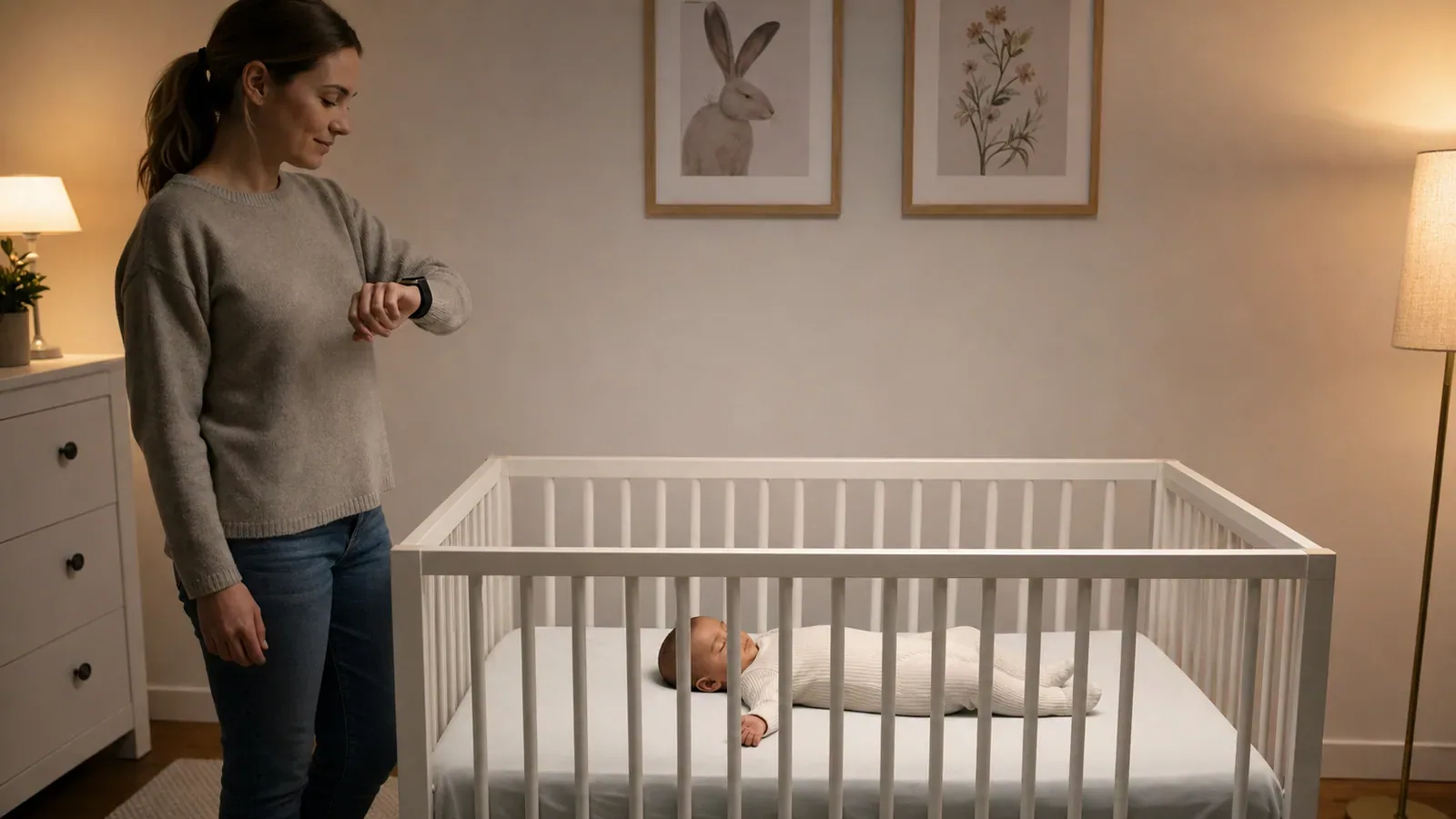
Scope note: This is caregiver workflow guidance, not medical advice or a feeding or sleep prescription. Follow your baby's cues and the individualized guidance of your pediatrician or other qualified health professional.
A timer can remind the adult, not schedule the baby
Life with a baby contains many half-finished thoughts. A private cue can remind a caregiver to check a bottle, switch a laundry load, begin a wind-down step, or record when a feed ended. It cannot tell you whether a baby is hungry, tired, uncomfortable, unwell, or ready to wake.
Choose the action before starting the timer and label it plainly: "check baby and room," "prepare handoff," or "return milk to refrigerator." When the cue arrives, observe the situation. The right next step may be to act, wait, feed, comfort, call for help, or ignore the original plan because the baby needs something else.
The American Academy of Pediatrics advises parents to look for signs of readiness and hunger when feeding babies, rather than treating age or a rigid schedule as the only guide. Feeding questions, growth concerns, and individual medical needs belong with the child's clinician.[3]
Protect safe sleep every time
No timer makes an unsafe sleep setup safe. The AAP recommends placing babies on their backs for every sleep on a firm, flat sleep surface, with the sleep area free of pillows, blankets, bumpers, and other soft objects. Follow the full current guidance, including recommendations about room sharing and approved sleep products.[1]
Fatigue creates moments when a caregiver may drift off unintentionally. HealthyChildren warns against sleeping with a baby on a couch or armchair and gives specific advice for returning the baby to a separate sleep space. Read that guidance before a difficult night, not for the first time while exhausted.[1]
A wrist cue can support an adult plan, such as waking a partner for an agreed handoff or checking that feeding supplies were put away. It should not be used to justify leaving a baby in a setting that requires supervision. If you are worried about staying awake or functioning safely, involve another adult or seek professional help.
Build a low-light night routine
Prepare the environment before the household goes to bed. Put necessary supplies in their safe, designated places, clear a path, charge devices away from the sleep space, and decide who is responsible for the first response. Less searching means fewer lights and fewer opportunities for mistakes.
Use the quietest cue that you can reliably notice. Test it during the day. Keep the watch worn as directed and make patterns simple. If a cue is important for medication, medical monitoring, or another clinical need, use the system recommended by the care team rather than relying on a general-purpose timer.
Keep a short note if handoffs are confusing. Record only what the next caregiver genuinely needs, such as when a feed ended or which prepared item was used. Avoid turning a tired night into detailed self-surveillance. The goal is continuity and safety, not a perfect data set.
Use routines as cues, not guarantees
A consistent wind-down can make the sequence predictable: reduce stimulation, complete ordinary care, read or sing, and place the baby in the appropriate sleep space. The exact routine changes with age, family, and health. A timer can pace the adult steps without promising when sleep will occur.
HealthyChildren describes regular routines as helpful and discusses putting babies to bed when drowsy, with developmentally appropriate expectations. It also acknowledges that babies have varied sleep patterns. Use the guidance as a source to discuss with your pediatrician, not as a claim that one technique works on command.[2]
If the routine takes longer one night, stay with the child rather than racing a timer. A silent cue can tell you that the planned sequence has reached a checkpoint. It does not impose a deadline on feeding, comfort, illness, or connection.
Make caregiver handoffs explicit
Before one adult rests, state who is responsible and for what period. Hand over the relevant information, not a vague "your turn." Confirm where the baby will sleep, which supplies are ready, and how to wake the resting adult if something falls outside the plan.
Reset private timers during the handoff rather than leaving an unexplained countdown running on someone else's device. Name the purpose aloud. If one person expects a cue to mean "wake me" and the other thinks it means "check again yourself," the tool has made coordination worse.
Single caregivers can use the same principle with a support person. Agree on a specific window for a call, visit, meal, or rest. A timer may prompt the request, but a real person and a realistic plan provide the support.
Know when the routine no longer applies
Illness, feeding difficulty, unusual sleepiness, breathing concerns, or a caregiver's sense that something is wrong can make an ordinary routine irrelevant. Contact the child's clinician or emergency services according to the situation and local guidance. Do not wait for the next timer.
Development also changes routines. A cue that helped during one month may become unnecessary or poorly timed later. Review timers whenever sleep, feeding, mobility, childcare, or the household schedule changes. Remove reminders that no longer have a clear, safe action.
Be cautious with online claims that promise to train a very young baby to follow a clock. Families deserve realistic language. A timer organizes an adult's attention. It does not diagnose a problem, prescribe an interval, or measure whether a caregiver is doing well.
Keep the system smaller than the care
Review the routine in daylight. Which cue prevented a forgotten step? Which one added stress? Did the handoff note help? Keep the useful pieces and delete the rest. More alarms do not produce more responsive care.
Store timer names without private health details, especially on shared or visible devices. "Caregiver check" may be enough. Keep any medical records or clinician-requested logs in the secure place and format the care team recommends.
The best silent timer in a baby routine is modest. It taps the adult at a chosen moment, then gets out of the way. The caregiver observes the baby, follows safe-sleep and feeding guidance, and chooses what the family needs next.
A simple handoff example
Imagine two caregivers sharing the first part of the night. Before one rests, they state when the last feed ended, where the prepared supplies are stored, and which safe sleep space is ready. They agree that a private cue will prompt a check-in, not dictate whether the baby should feed or sleep.
When the cue arrives, the alert caregiver observes the baby and the situation. If the baby is sleeping safely and there is no clinician-directed reason to wake them, the caregiver follows the family's appropriate plan. If the baby is showing cues or needs care, the caregiver responds rather than waiting for another interval.
At the next handoff, one sentence may be enough: what happened and what the next adult needs to know. The old timer is stopped and any new reminder is labeled. This prevents an unexplained countdown from crossing between devices or people.
The example works because responsibility is explicit and the timer has a narrow role. It does not propose a feeding interval, sleep duration, or medical threshold. Those decisions come from the baby, current safety guidance, the family, and qualified care professionals.
Daytime preparation can make the example more reliable. Caregivers can review current safe-sleep guidance together, ask the pediatrician about individual feeding or health concerns, and decide whom to call when ordinary plans no longer fit. A quiet night cue works better when the important decisions were not left for an exhausted moment.
If one caregiver is too tired to respond safely, the plan must change. Wake the agreed support person, place the baby in the safe sleep space, or seek appropriate help. Do not use a repeating vibration as a substitute for alert supervision.
References
- [1] Safe Sleep Tips for Sleep-Deprived Parents. HealthyChildren.org, American Academy of Pediatrics.
- [2] Getting Your Baby to Sleep. HealthyChildren.org, American Academy of Pediatrics.
- [3] Baby Food and Feeding. HealthyChildren.org, American Academy of Pediatrics.
Related articles
Parenting Routines
How to Build a Calm Family Routine with Time Cues
Use visible plans and quiet time cues to make transitions more predictable for children without expecting a timer to do the parenting.
Read the articleCooking & Baking
How to Run Multiple Kitchen Timers Without Losing Track of Dinner
Create a simple kitchen timing system for overlapping dishes while keeping food-temperature checks and safe handling in the foreground.
Read the articlePut quiet timing on your wrist
Get Haptica: Silent Watch Timer from the App Store and build timing cues that fit your routine.
Get Haptica on the App Store