How to Build a Calm Family Routine with Time Cues
Children handle time better when they know what is happening now and what comes next. A cue works best when it belongs to a familiar routine.
Scope note: Children differ in development, communication, sensory needs, health, and family context. Adapt routines with your child's needs and professional guidance in mind.
Predictability begins with what comes next
A child who hears "hurry up" may not know what action to take or why the pace changed. A routine makes the sequence concrete: put away the activity, use the bathroom, choose pajamas, brush teeth, read, and lights out. The timer is only one cue inside that sequence.
The Centers for Disease Control and Prevention describes family structure as consistency, predictability, and follow-through. It recommends routines and rules that help young children understand what to expect. That does not require a rigid household. It means the important pattern is recognizable.[3]
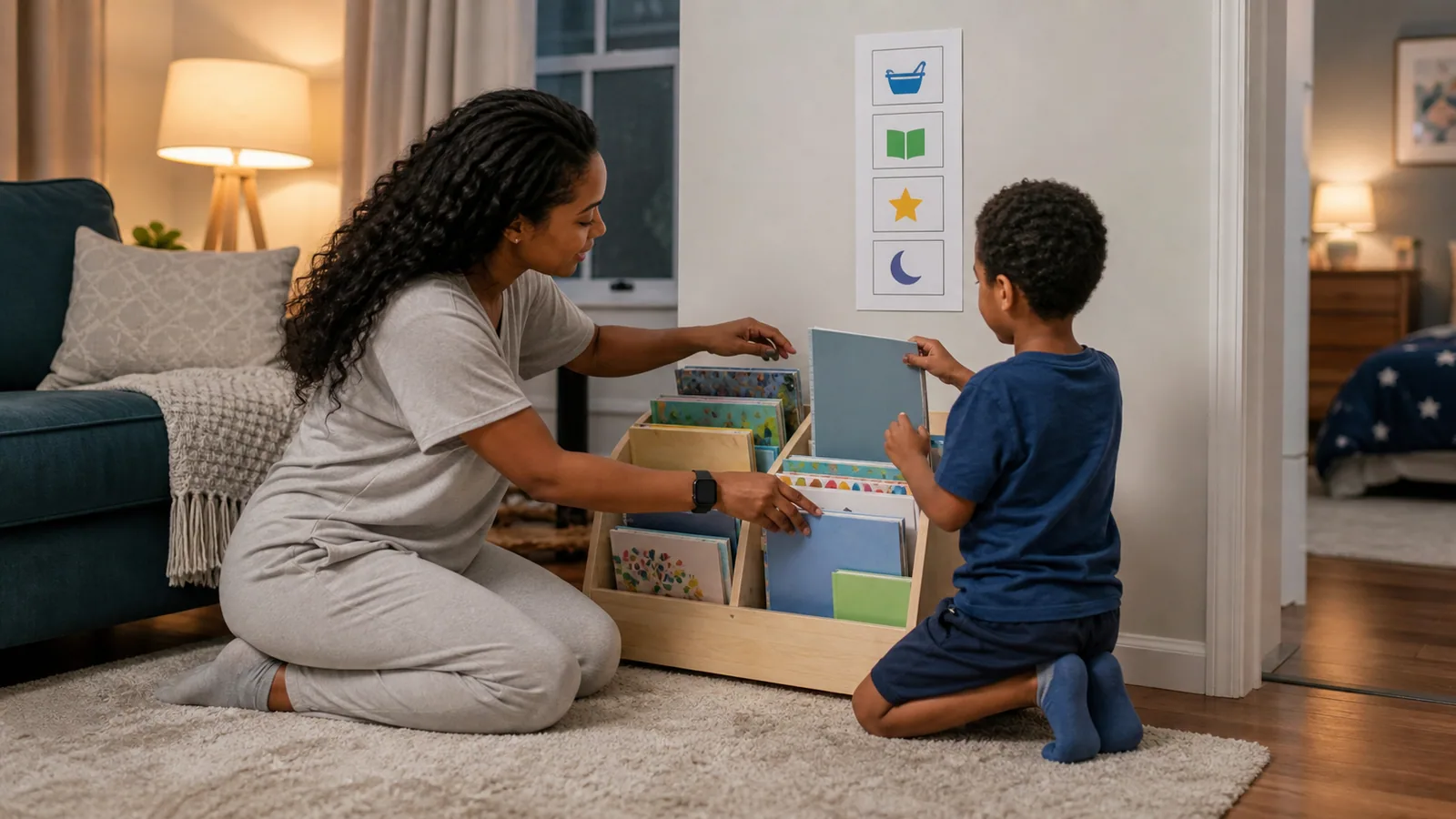
Choose one routine that causes repeated friction. Draw or write three to five steps at the child's level. Keep the language observable. "Shoes on" is clearer than "get ready." Practice the sequence at an unhurried time before expecting a timer to help during the busiest part of the day.
Give warnings that carry information
A transition cue should say what is ending and what follows. "Five minutes until we put the blocks away and wash hands for dinner" is more informative than "five minutes." For younger children, show the next item or point to the routine card while you say it.
Use one early warning and one final cue rather than a stream of reminders. Repeated countdowns can become background noise or prolonged negotiation. When the final cue arrives, move into the practiced first step and offer the limited choices that are genuinely available.
Private wrist cues can help the adult remember to give a calm warning before frustration builds. The child does not need to be managed by an invisible alarm. Tell them what is happening in ordinary language so the routine remains understandable and trustworthy.
Offer choices inside a firm boundary
Choices can preserve agency without reopening the whole plan. A child might choose the red pajamas or blue pajamas, one book or another, or whether to carry the lunchbox or water bottle. Both options should be acceptable to the adult.
Do not offer a false choice such as "Do you want to leave?" when leaving is necessary. State the boundary and offer a choice about how to meet it. Clear language reduces the argument created when a child says no to an option that was never truly optional.
When the routine needs a consequence or rule, keep it immediate, understandable, and appropriate for the child's development. CDC parenting resources emphasize specific directions and consistent follow-through. Families with concerns about behavior or development should seek individualized support rather than escalating a timer system.[3]
Build a bedtime path that can slow down
Bedtime benefits from a repeatable order and lower stimulation. Prepare the physical steps first, then leave room for connection. A timer might prompt the adult to begin the routine, protect reading time, or signal when to move from one ordinary step to the next.
HealthyChildren discusses regular bedtime routines and developmentally appropriate ways to help babies and children settle. Expectations should reflect age and individual needs. A timer does not decide when a child is sleepy or replace guidance from the child's health professional.[2]
For babies, safe-sleep recommendations remain nonnegotiable. The AAP advises back sleeping on a firm, flat surface with the sleep space clear of soft objects. A calm routine never justifies using an unapproved sleep position or product.[1]
Design mornings backward from the door
Start with the departure time and identify what must happen before it. Put adult tasks and child tasks on separate lines. Pack bags, choose clothes, and locate shoes the night before where possible. The morning timer should not carry work that could have been removed from the morning.
Create a cue for the last reversible moment. Ten minutes before leaving might mean breakfast ends and shoes begin. A second cue can mark the door. If the first cue regularly arrives while a child is still eating, change the wake time, menu, or sequence instead of increasing pressure.
Use neutral language when the plan slips. "We have five minutes, so I will help with the bag while you put on shoes" solves the immediate problem. A lecture about every previous late morning does not. Review the pattern later, when nobody is holding a coat at the door.
Make the routine accessible to the child
Some children benefit from pictures, first-then language, a visible timer, rehearsal, fewer words, or more transition time. Others find countdowns stressful. Watch the child's response and adapt. A system is not calm merely because the alarm is silent.
Invite age-appropriate participation. Ask which step is hardest, where a reminder would help, or what song belongs during cleanup. Children are more likely to understand a routine they helped make, though adults still hold safety and household boundaries.
Coordinate across caregivers. Use the same core sequence and language where practical, while allowing different adults to have their own style. If one person grants repeated extensions and another treats the first cue as final, the inconsistency becomes the focus.
Review the friction, not the child
After several days, ask where the routine breaks. Is the warning too late? Are there too many steps? Is a necessary item always missing? Does the child need help beginning? Treat the problem as information about the system rather than proof that someone is difficult.
Keep one success visible. Perhaps everyone reaches the table with less shouting, bedtime starts at a more predictable point, or the child puts away one activity with a single reminder. Small improvements are easier to repeat than a complete household overhaul.
A timer earns its place when it makes the next step clearer and gives the adult a calmer moment to respond. The relationship remains more important than the schedule. Use cues to support a known routine, then let conversation and care do the real work.
Use a repair plan for the hard days
Even a familiar routine can fall apart after poor sleep, a schedule change, illness, travel, or an exciting event. Decide what the minimum version looks like. A bedtime routine might shrink to ordinary care, one short connection step, and the usual sleep boundary. The minimum should preserve safety and relationship, not preserve every decorative detail.
If an adult raises their voice or a child becomes overwhelmed, pause the countdown. Regulate the immediate situation before teaching the routine. Later, use a simple repair: acknowledge what happened, restate the next step, and try again. A timer should never be used to intensify a standoff.
Notice whether the schedule asks a child to switch faster than the adults do. Adults receive calendar alerts, travel buffers, written agendas, and time to finish a sentence. Children also benefit from meaningful warning and help closing an activity. Fair expectations make consistency more credible.
As children gain skill, transfer one part of the routine. Let them start the cleanup cue, check the picture list, or tell the family which step comes next. Independence grows from supported repetition. It does not require removing help all at once.
Keep transitions between households, school, childcare, and activities in mind. The routines do not need to be identical, but children benefit when adults explain what changes. A small travel version of the picture sequence or a familiar phrase can preserve the shape of bedtime without pretending every setting is the same.
Siblings may need different help even when they share a departure time. One child may use a visual list while another responds to a single verbal warning. Coordinate the household boundary, then provide the support each child needs. Fairness does not require making every cue identical.
Remove the timer when a routine has become easy. Continuing to cue every mastered step can turn support into nagging. Keep the visible sequence if it still helps, or let the child take over the reminder. Tools should change as competence grows.
References
- [1] Safe Sleep Tips for Sleep-Deprived Parents. HealthyChildren.org, American Academy of Pediatrics.
- [2] Getting Your Baby to Sleep. HealthyChildren.org, American Academy of Pediatrics.
- [3] Creating Structure and Rules. Centers for Disease Control and Prevention.
Related articles
Parenting Routines
Silent Timers for Baby Naps, Night Feeds, and Bedtime Routines
Use private timer cues as prompts for caregiver routines without turning a timer into a feeding schedule, sleep rule, or substitute for a baby’s needs.
Read the articleFocus Sessions
A Quiet Pomodoro Workflow for Apple Watch
Create a quiet Pomodoro-style workflow with an Apple Watch, clear work intentions, useful breaks, and fewer reasons to check a screen.
Read the articlePut quiet timing on your wrist
Get Haptica: Silent Watch Timer from the App Store and build timing cues that fit your routine.
Get Haptica on the App Store