Silent Timing for Rehearsals and Recording Sessions
A recording room already has enough sound. Private cues can keep the session moving while the microphones, musicians, and conversation stay focused on the take.
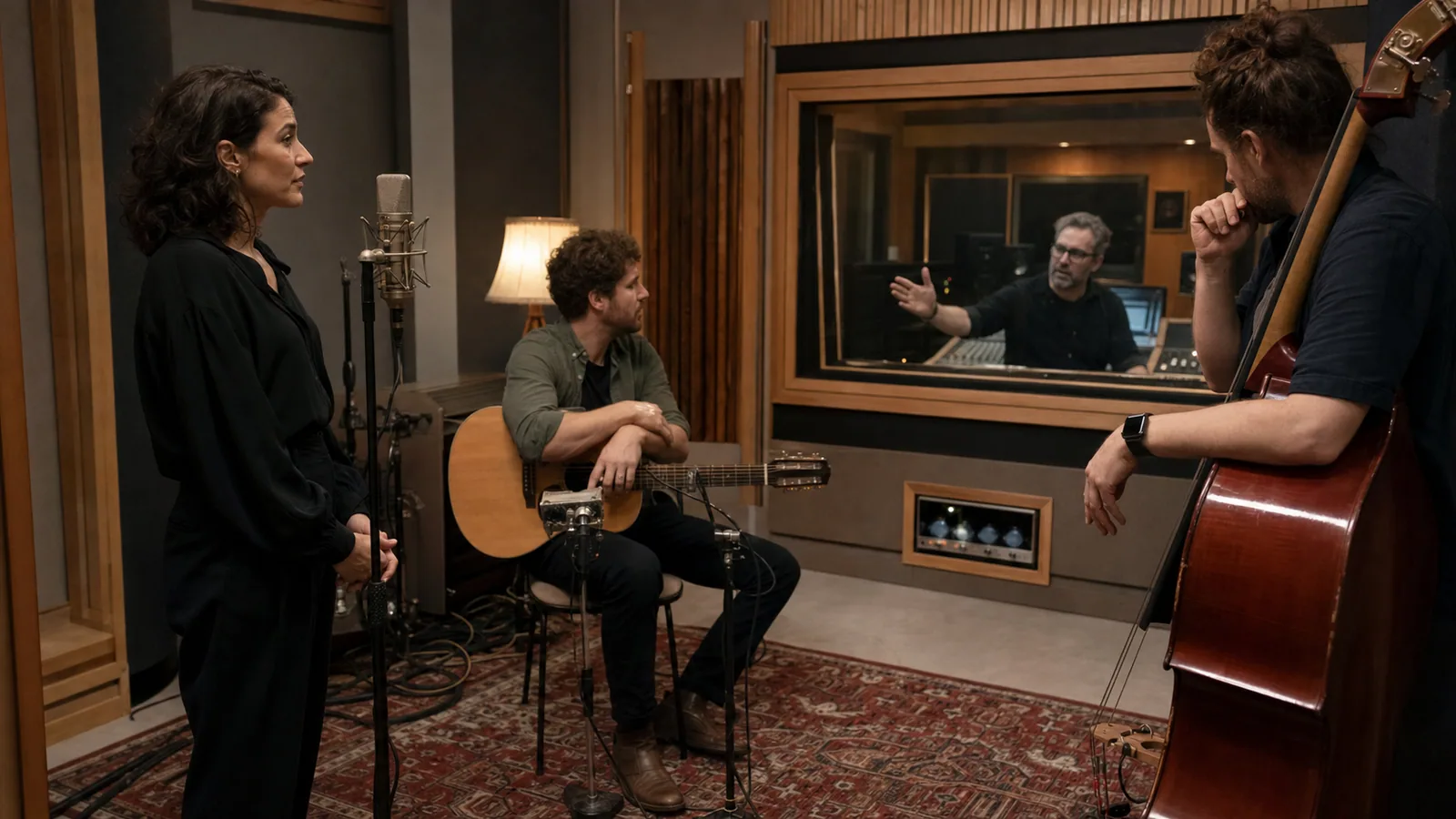
Scope note: Protect hearing, physical health, equipment, and contractual break requirements. Session leaders should follow applicable workplace rules and the guidance of qualified audio and music professionals.
Keep time outside the microphones
A recording room already contains talkback, count-ins, headphone feeds, ventilation, and the sound being captured. A phone alarm adds noise at exactly the wrong moment. Private timing cues can tell the producer, engineer, conductor, or session leader when a block is nearing its boundary without entering the take.
Choose one person to own session time. Everyone should know whether that person is tracking musical work, contractual time, facility time, or all three. A wearable cue can support awareness, but official agreements, safety requirements, and the studio clock remain authoritative.
Write a simple run sheet with setup, sound check, takes, listening, revisions, breaks, and teardown. Add changeover time for microphones, instruments, charts, or performers. Sessions run late when every line includes playing but none includes the work between sounds.
Give each block a result
Name the purpose before pressing record: capture a complete safety take, repair the second chorus, compare two microphone positions, or test the new tempo. A ten-minute block with a result is easier to lead than ten minutes of "try it again."
Deliberate-practice research emphasizes focused activity intended to improve performance, with feedback and opportunities for repetition. Researchers continue to debate definitions and how much deliberate practice explains expert performance. The useful session lesson is modest: repetition should have a reason and evidence.[1][2]
Tell the room what will happen when the cue arrives. It might mean finish the current take, stop after the current pass, or move to listening. The cue should never surprise a performer in the middle of a physically or musically sensitive task.
Create a cue language for the leader
Use two or three patterns at most. One might mean five minutes remain in the block, another might mark the agreed break, and a final one might signal the facility boundary. Test them with normal arm movement and while wearing headphones. A cue that is obvious in silence can disappear during a loud take.
Keep the watch screen dark or angled away from performers if visible checking changes the room's energy. The leader should not appear impatient every time a cue arrives. Finish listening, make the planned decision, and communicate it in ordinary musical language.
Have a backup that remains outside the recording path. The control-room clock, a visual studio timer, or a producer's written schedule can provide redundancy. If missing a break or stop would breach safety or an agreement, do not depend on one consumer device.
Separate takes from evaluation
After a take, allow a short note from each person who needs to speak. The leader summarizes the next action: keep the full take, punch one phrase, adjust balance, or try one defined alternative. Then start the next block. Unbounded discussion can consume more time than the recording.
Use consistent take names and markers. A timing system is much less valuable if nobody can find the performance later. Say the take number before recording when appropriate, and have the engineer maintain the session record. Do not put private artist or project details in a consumer timer label.
When opinions differ, run a controlled comparison. Hold everything possible constant and change one variable. Time-box the experiment, listen back at a suitable level, and decide. Endless option generation can feel productive while postponing the musical choice.
Protect breaks before fatigue chooses them
Schedule recovery based on the people, instruments, sound levels, and applicable rules. Singers, brass players, string players, engineers, and guests may need different kinds of rest. Ask directly and build the plan with margin. A cue can remind the leader, but it cannot assess fatigue or hearing.
Quantity alone is a weak description of practice. A study of young musicians found that both quantity and formal aspects of practice predicted performance, while informal playing was not a significant predictor in the same way. The study was observational and does not provide a universal session formula, but it supports looking at what the time contains.[3]
During breaks, lower exposure, change posture, hydrate, and meet individual needs. Avoid using every pause for another playback at the same level. Confirm the return time and what will happen first so the room can resume without ten minutes of reorientation.
Recover a session that is running late
At the first warning, identify the session's essential deliverable. A complete main take may matter more than optional doubles. A clean dialogue edit may matter more than another microphone comparison. State what you will protect and what moves to a later session.
Do not steal time from teardown or safe packing. Facility access, transport, file backup, cable management, and instrument care are part of the session. Put their start time on the run sheet and treat the final cue as a transition into that work.
Communicate changes plainly. "We have twenty minutes, so we will record one complete pass and one targeted repair" gives the room a winnable plan. Pretending the schedule has not changed encourages rushed takes and frustration.
Close with a usable record
Before people leave, confirm the selected takes, unresolved questions, file responsibilities, and next session. Back up according to the production's process. The leader's timer does not replace the engineer's session log, contracts, cue sheets, or production documentation.
Review the run sheet afterward. Which setup estimate was wrong? Where did discussion expand? Did the warning arrive early enough to choose? Adjust the template for the same ensemble and room. Accurate changeover estimates become a real production asset.
Silent timing succeeds when nobody remembers the timer. The room remembers a session that had enough space to listen, a clear reason for each take, regular recovery, and an ending that protected both the work and the people making it.
Map a ninety-minute rehearsal block
For a small ensemble, the first ten minutes might cover setup, tuning, a level check, and the day's priorities. The next twenty can address one difficult transition at reduced tempo. A private warning tells the leader when to connect that work to a complete section rather than drilling indefinitely.
After a short break, use twenty-five minutes for complete passes with notes between them. Reserve a final musical block for the highest-priority repair and one uninterrupted run. The last ten minutes belong to decisions, file exchange where relevant, instrument care, and safe teardown.
A recording session may allocate more setup and playback time, while a rehearsal may allocate more ensemble repetition. The exact numbers should follow the work, people, and agreements. The useful feature is that every boundary has a named decision and the ending is not borrowed from cleanup.
If the group reaches the goal early, stop or choose a prepared secondary question. Avoid manufacturing extra takes simply because the room remains booked. Fatigue, storage, editing, and attention all have costs. More material is not always more usable material.
For sessions with remote participants, place connection checks and file transfer in the run sheet. Latency may make real-time ensemble work impractical, and upload time can consume the scheduled ending. Agree on sample rate, file naming, count-ins, and delivery responsibility before the first take, using the production's technical standards.
A cue can also protect listening time. Reserve a block in which nobody reaches for an instrument while the take plays. Ask each person to note the musical issue and location, then compare. Focused playback often prevents an unnecessary repeat based on a vague impression.
The session leader should watch the room, not only the schedule. Frustration, pain, equipment instability, or hearing concerns can require an earlier stop. The timer supplies a boundary that was chosen in advance. It does not overrule the evidence arriving from people and equipment.
References
- [1] The Influence of Deliberate Practice on Musical Achievement: A Meta-Analysis. Frontiers in Psychology via PubMed.
- [2] Deliberate Practice and the Original Definition. Frontiers in Psychology via PubMed.
- [3] Quantity and Quality of Musical Practice as Predictors of Performance. British Journal of Psychology via PubMed.
Related articles
Music Practice
How to Structure a 60-Minute Music Practice Session
Turn one hour of music practice into purposeful blocks for preparation, technique, problem solving, repertoire, and a useful closing review.
Read the articlePresentation Timing
Presentation Timing Signals: Halfway, Wrap-Up, and Hard Stop
Design three useful presentation timing signals so you know when to adjust, begin the close, and stop without distracting the audience.
Read the articlePut quiet timing on your wrist
Get Haptica: Silent Watch Timer from the App Store and build timing cues that fit your routine.
Get Haptica on the App Store