Tabata Timing Explained: 20 Seconds of Work, 10 Seconds of Rest
Twenty seconds sounds short until the effort is truly hard. The familiar 20:10 structure only makes sense when you understand what it asks of the athlete.
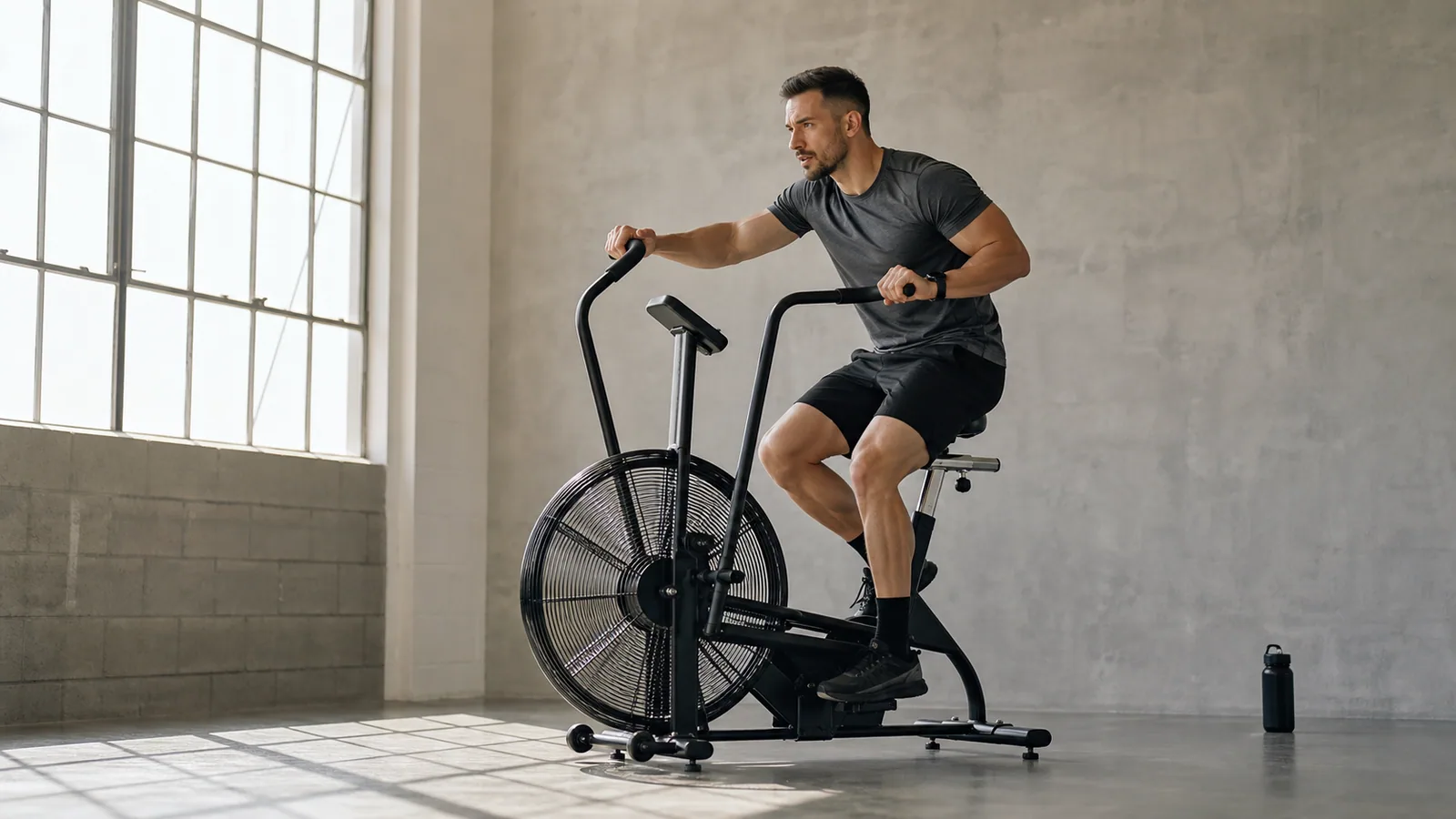
Scope note: Tabata-style exercise can be extremely demanding. This timing guide is not a recommendation that every reader perform maximal intervals.
Four minutes can carry a large training demand
Tabata is often presented as the shortest possible workout: 20 seconds of effort, 10 seconds of rest, repeated eight times. The arithmetic is correct. Eight rounds take four minutes. The conclusion that four minutes makes the session easy is not. When work intensity is genuinely high and recovery lasts only half as long as work, fatigue accumulates quickly.
The name is also used loosely. Fitness classes apply 20:10 timing to strength movements, circuits, and moderate calisthenics. Those can be valid sessions, but a shared clock does not make them physiologically identical to the cycling protocol associated with Tabata research. Exercise mode, relative intensity, training history, and the ability to maintain output all matter.
A research review of the protocol notes that it is commonly described as eight 20-second bouts separated by 10 seconds, historically associated with work near 170 percent of the power at maximal oxygen uptake. Researchers have questioned whether many people can complete all eight bouts at that load. That debate is useful because it separates a memorable timer from the demanding protocol behind it.[1]
Know what the 20 seconds represent
In a true maximal or near-maximal interval, 20 seconds is not a casual burst. The effort should be hard enough that repeating it after only 10 seconds becomes progressively difficult. That makes movement selection important. A stationary cycle can limit some consequences of fatigue. A complex lift, crowded sprint lane, or unfamiliar jumping exercise can become unsafe when technique changes.
For general fitness, it is reasonable to borrow the timer while changing the intensity. Call it a 20:10 interval session rather than claiming it reproduces a laboratory protocol. Set a target you can control, such as brisk but technically sound work for all eight rounds. The timer remains useful without requiring a maximal effort.
One study of kettlebell swings compared eight 20-second maximal bouts with 10-second rests against a traditional four-set protocol. Fourteen young adults participated, so the findings should not be generalized broadly. The interval condition was faster and generated substantial cardiovascular and metabolic demand. The small sample still reinforces a practical point: familiar movements can become very different under dense timing.[2]
Warm up for the movement, not the timer
A four-minute main set does not justify a four-minute visit to the gym. Raise body temperature, move through the ranges needed for the exercise, rehearse technique, and perform a few progressive efforts. The harder the planned work, the more important it is to know what the movement feels like before the first official interval.
Use the warm-up to test the cue pattern. Feel one work cue and one recovery cue while moving. Confirm that the watch or phone is secure and that focus settings will not suppress or confuse the signal. Clear the floor and place equipment so the 10-second recovery does not become a race across the room.
Decide on a stop rule while you are fresh. Examples include loss of safe technique, dizziness, pain, inability to control the equipment, or a large fall in output when the goal requires consistency. A timer will continue counting unless you stop it. It cannot judge the quality of the movement for you.
Make the work and rest cues unmistakable
Ten seconds passes too quickly to study a screen. Use one clear haptic pattern for work and another for recovery. The final cue should be different again. Three signals are enough. If you cannot identify them during the warm-up without looking, simplify the pattern before starting.
The rest interval is for recovery and positioning. Stop the movement safely, breathe, and prepare to resume. Avoid changing music, logging repetitions, or checking messages. Those tasks consume the entire break and can make the next start rushed. If equipment requires more than 10 seconds to handle safely, choose another movement or another ratio.
Place the timer where an accidental touch is unlikely. On a watch, confirm the band fit and controls. On a phone, keep it away from weights and feet. Haptics can reduce screen checking, but they do not remove the need for a safe environment or a backup plan if a cue is missed.
Pace the first rounds with the last rounds in mind
A common mistake is treating the first 20 seconds as a test of absolute speed. The athlete wins round one and spends the next three minutes trying to survive the decision. If the session goal is repeatable output, begin at the hardest pace you can preserve reasonably across the set. That still feels hard, especially with such short recovery.
You can use a simple quality marker. Count cycle revolutions, distance, or controlled repetitions when it is safe to do so. Compare the first and final rounds without turning the session into a competition. A steep decline suggests that the opening pace, exercise, or recovery needs adjustment. It does not prove the session was more effective.
Recent research continues to use 20:10 timing in different populations and volumes. One study of 32 male university students with overweight or obesity compared one, two, and three four-minute cycles separated by ten minutes. The results concerned post-exercise metabolism in that specific group and should not be treated as a prescription. It shows how much protocol details and total volume can change the question being studied.[3]
Scale the structure without pretending it is the same protocol
Beginners can use the clock at a moderate effort, choose a low-skill movement, or complete fewer rounds. Another option is to keep 20 seconds of work and lengthen recovery. Each change creates a different session, which is fine. Clear naming is more useful than protecting the Tabata label.
For strength-oriented movements, stop the set before speed replaces control. For running, use a clear lane and avoid sudden all-out sprints without preparation. For group classes, allow space and provide a visible or audible option for anyone who cannot rely on haptics. Accessibility and safety matter more than making every participant follow the identical cue.
Do not stack repeated four-minute cycles merely because the first one is short. Additional volume changes recovery needs and total stress. If you are following a coach or established program, use its work, recovery, and volume instructions rather than adding rounds through the timer interface.
Finish with information you can use next time
After the final cue, move easily as appropriate and allow breathing to settle. Then note the exercise, effort target, completed rounds, and whether output and technique remained acceptable. A single sentence is enough. The record helps you distinguish a well-designed session from one that was simply exhausting.
If you missed cues, adjust the haptic pattern or device placement before increasing intensity. If transitions felt unsafe, choose a simpler movement or longer rest. If the final rounds stayed controlled and the session fit the larger plan, save the template. Repeatability is one of a timer's best advantages.
The 20:10 clock is memorable because it is simple. Good use requires the decisions around it: why this movement, why this effort, why eight rounds, and what will make you stop. Answer those questions first, then let the timer handle the counting.
When a group uses 20:10 timing, let each participant choose an appropriate movement, resistance, and effort within the coach's plan. Put stations far enough apart, keep transitions simple, and explain that stopping is always available. A common timer can organize a room without demanding identical output from every person.
Record the exercise, rounds completed with sound form, and whether the cue patterns were clear. If performance fell sharply, the next session may need fewer rounds, less intensity, more recovery, or a different movement. The famous ratio is not a reason to ignore evidence from the athlete.
References
- [1] Defining the Number of Bouts and Oxygen Uptake During the Tabata Protocol. Physiology & Behavior via PubMed.
- [2] Cardiovascular and Metabolic Demands of Kettlebell Tabata Intervals. Journal of Fitness Research via PubMed.
- [3] Two Tabata Cycles in a Single Training Set and Post-Exercise Fat Oxidation. Journal of Exercise Science & Fitness via PubMed.
Related articles
Workout Intervals
How to Build a HIIT Interval Timer That Fits Your Workout
Build a HIIT timer around your actual work, recovery, transition, and round structure instead of copying a generic interval preset.
Read the articleFocus Sessions
A Quiet Pomodoro Workflow for Apple Watch
Create a quiet Pomodoro-style workflow with an Apple Watch, clear work intentions, useful breaks, and fewer reasons to check a screen.
Read the articlePut quiet timing on your wrist
Get Haptica: Silent Watch Timer from the App Store and build timing cues that fit your routine.
Get Haptica on the App Store